Alliance Fire Protection Services | Fire Alarms, Sprinklers, Extinguishers & Life Safety Systems
- 24/7 PROTECTION.
- PEACE OF MIND
- (770) 554-5004
- SALES@ALLIANCEFIRE.COM
- (770) 554-5004
- SALES@ALLIANCEFIRE.COM

Life Safety Central
About Alliance Fire Protection Services
Life Safety Central
When an emergency occurs, timely communication can save lives. Whether it’s a severe weather event, an active threat, a fire, or another critical incident, the ability to quickly deliver clear, reliable information to large groups of people is one of the most important components of any life safety plan.
At Alliance Fire Protection Services (AFPS), we believe that education is just as important as the systems we install and maintain. That’s why our Life Safety Central resource is dedicated to helping businesses, organizations, schools, and property managers better understand the technologies and strategies that improve emergency preparedness.
What Is Mass Notification?
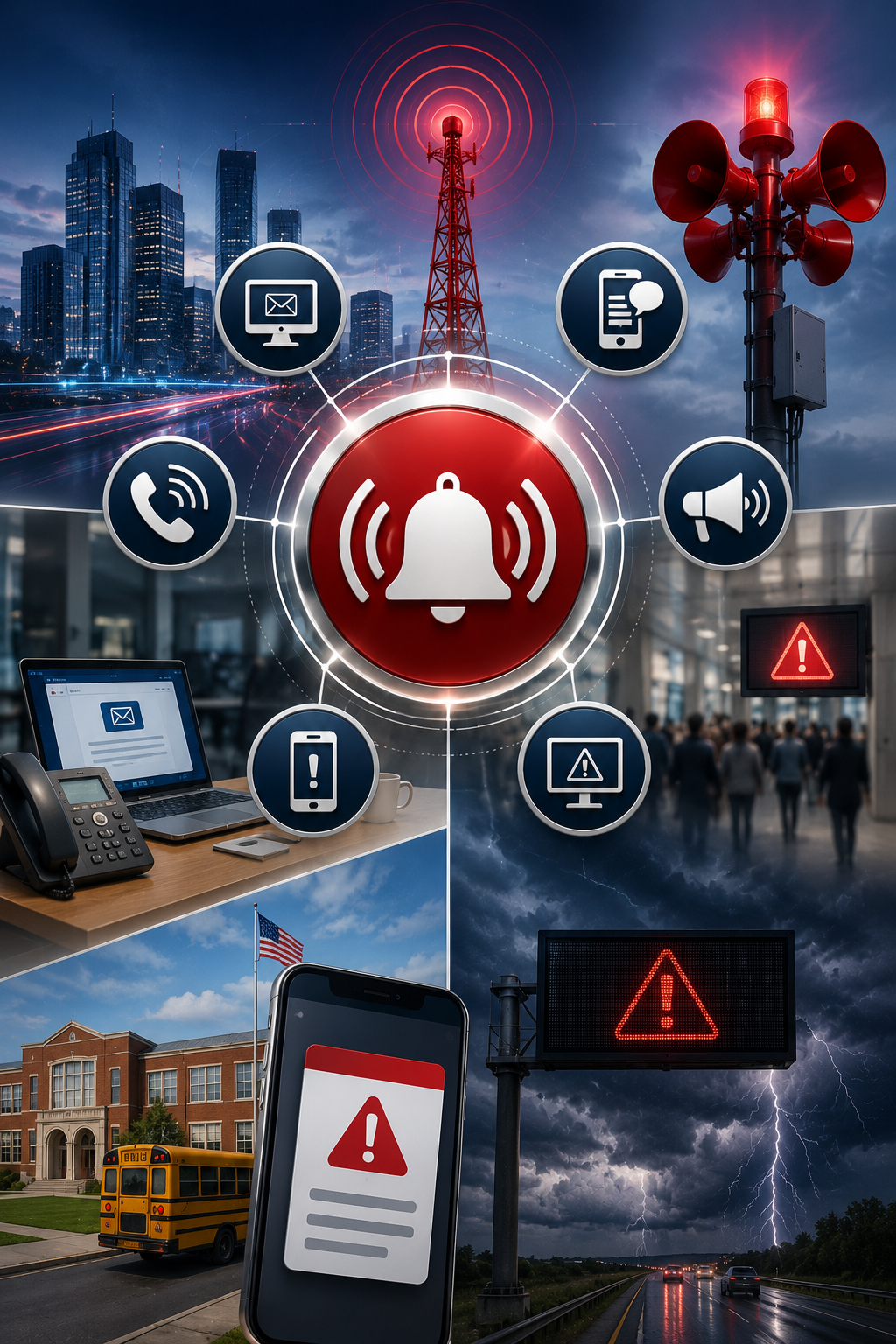
In its simplest form, mass notification is the process of broadcasting information efficiently and reliably to a large number of people.
Modern mass notification systems can communicate through multiple channels simultaneously, helping organizations quickly distribute important information during both routine operations and emergency situations.
Examples include:
- Emergency evacuation instructions
- Severe weather alerts
- Fire alarm notifications
- Active threat warnings
- Facility lockdown announcements
- School notifications
- Business continuity updates
- Public safety messages
- Employee communications
- Community emergency alerts
The goal is simple: deliver the right information to the right people at the right time.
Mass Notification Has Been Around for Centuries
While today’s systems use advanced digital technology, the concept of mass notification is far from new.
One of the earliest documented examples dates back to 1692, when the village of Bedford, New York employed a paid town drummer. His responsibility was to sound the town drum and warn residents of an impending Native American attack. Although primitive by today’s standards, the objective was exactly the same as it is today—to quickly communicate critical information that could protect lives.
Over the centuries, the methods have changed dramatically, but the mission has remained constant.
The Evolution of Modern Mass Notification
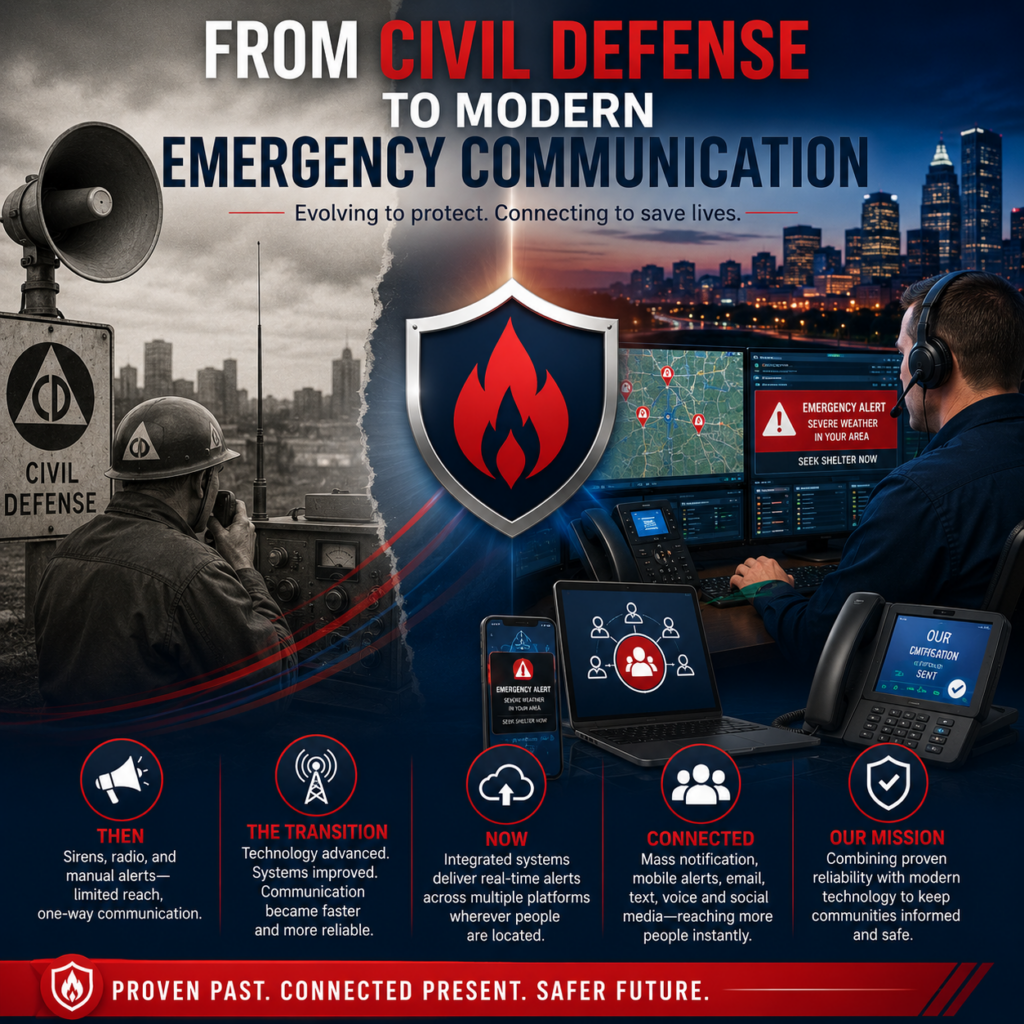
Today’s mass notification systems have evolved far beyond traditional sirens and alarms.
Modern systems can deliver emergency messages using multiple communication methods simultaneously, including:
- Voice announcements
- Text messages
- Mobile notifications
- Email alerts
- Desktop notifications
- Digital signage
- Loudspeaker systems
- Indoor and outdoor speaker arrays
- Telephone notifications
- Integrated fire alarm voice evacuation systems
From Civil Defense to Modern Emergency Communication
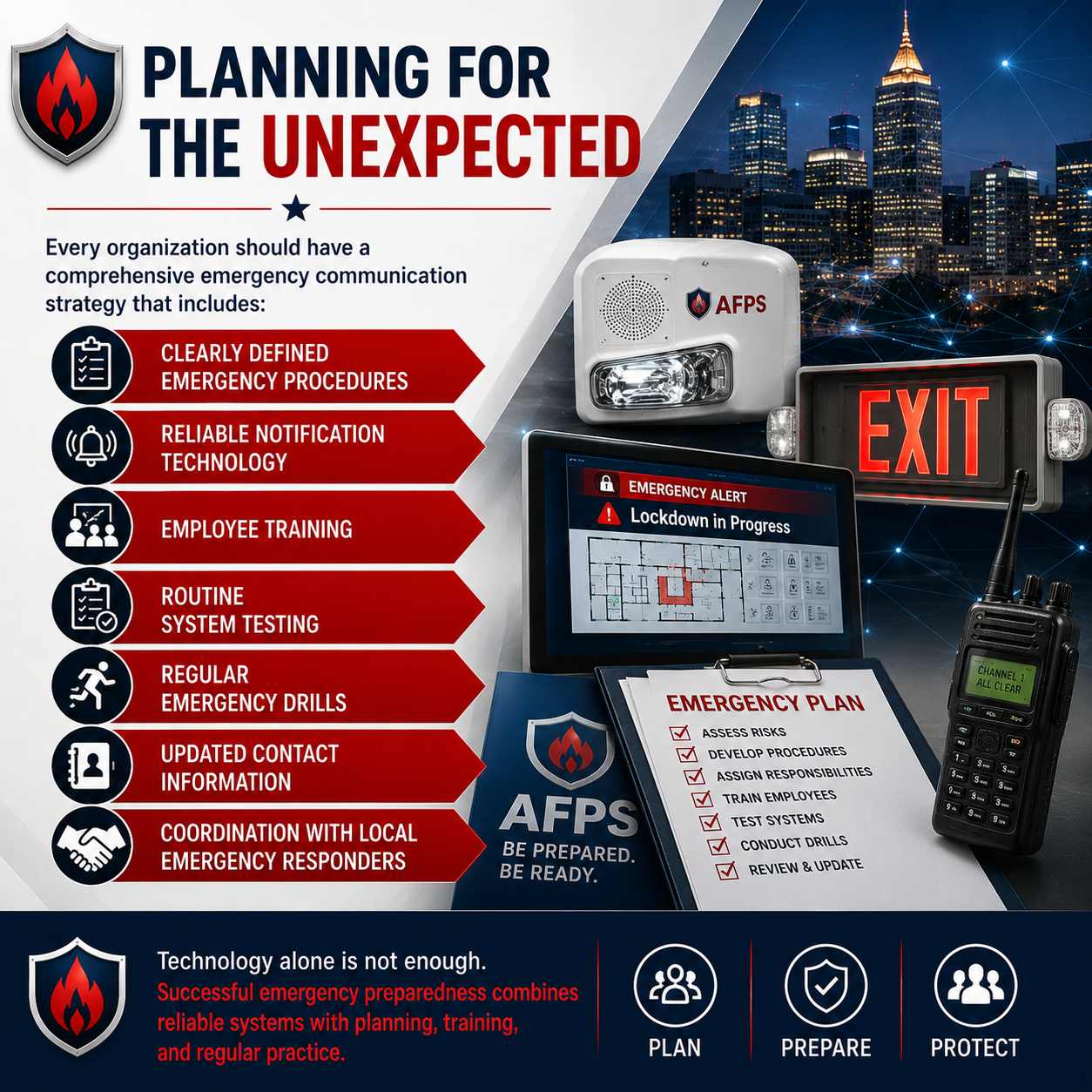
Many people remember the Civil Defense programs of the 1950s and 1960s during the Cold War.
Communities across the United States relied on air raid sirens to warn citizens of potential nuclear attacks. Schools conducted regular emergency drills, teaching children how to respond and where to seek shelter. Sirens had distinctive tones to indicate different situations, including alerts, all-clear notifications, and routine testing.
As geopolitical tensions eased, many communities repurposed these warning systems to alert residents of approaching severe weather, such as tornadoes and other natural disasters.
Over time, however, emergency preparedness became less visible in everyday life, and many people assumed that large-scale emergencies were unlikely to occur close to home.
Unfortunately, history proved otherwise.
Lessons from History
The tragic events of the 1993 World Trade Center bombing and the September 11, 2001 terrorist attacks forever changed the way emergency communication is viewed.
Investigations into the September 11 attacks revealed an important lesson: information saves lives.
Research involving survivors found that many occupants delayed evacuating after the initial alarms sounded. Instead of leaving immediately, people often waited for additional information, finished work, gathered personal belongings, made phone calls, or attempted to determine what was happening before taking action.
These delays, even when only a matter of minutes, significantly increased the risks faced by building occupants during rapidly evolving emergencies.
The findings reinforced the need for emergency communication systems that do more than sound an alarm. Occupants need clear, timely instructions that tell them what is happening, what actions to take, and where to go.
Why Mass Notification Matters
An effective mass notification system helps organizations:
- Protect employees and visitors
- Improve emergency response times
- Reduce confusion during emergencies
- Deliver clear evacuation instructions
- Communicate during severe weather events
- Support business continuity plans
- Improve overall emergency preparedness
- Enhance life safety throughout the facility
Whether responding to a fire, severe weather, hazardous material release, security threat, or other emergency, fast and accurate communication can significantly improve outcomes.
Alliance Fire Protection Services Can Help
As a full-service life safety company, Alliance Fire Protection Services understands that protecting people involves more than installing fire alarms and sprinkler systems. Effective communication is a critical part of every comprehensive life safety program.
Our experienced professionals can help organizations evaluate their life safety needs and recommend solutions that improve emergency preparedness while supporting applicable fire and life safety standards.
Whether you’re planning a new facility, upgrading existing systems, or looking to improve emergency communication capabilities, Alliance Fire Protection Services is here to help.
Selecting the Right Mass Notification System
Coming Next in Life Safety Central
Not all mass notification systems are created equal. In our next Life Safety Central article, we’ll explore the factors organizations should consider when selecting a mass notification solution, including scalability, communication methods, code requirements, system integration, and choosing the right technology for your facility.
Stay tuned as we continue exploring the technologies and strategies that help protect lives, property, and businesses throughout Metro Atlanta.